October marked one year of working for Word of MICE, a company created by Mariska Kesteloo. I was pleasantly surprised because it was Mariska who reminded me of this anniversary by preparing a surprise for me and my wife Alicia.
It is an amazing time in my life. I would like to share a personal story with you about this extraordinary year and working together with Mariska. Especially since we haven’t met once in the whole year of our collaboration. All the meetings with Mariska took place online on Zoom and using other online tools but we got along very well and I learned what the Dutch sense of humour means.
The first step
A few years ago, when my wife Alicia and I were living in the UK, I noticed that Mariska was actively sharing her knowledge about B2B influencer marketing in the MICE industry.
I was eager to know more about this topic as she was the only person covering B2B influencer marketing in the MICE industry. I was also very interested in using social media to promote tourism and destinations. We met through LinkedIn and corresponded from time to time.
The first time (and interestingly the only time) we met in the real world was in London. It was in February 2019 at the International Confex trade show. I remember that I came to the fair in London from Cambridge and, apart from the fair, my main goal was to meet Mariska personally.
For many months Alicia and I lived in London right next to the Kensington Olympia exhibition centre, so it was also a sort of sentimental journey to where we used to live.
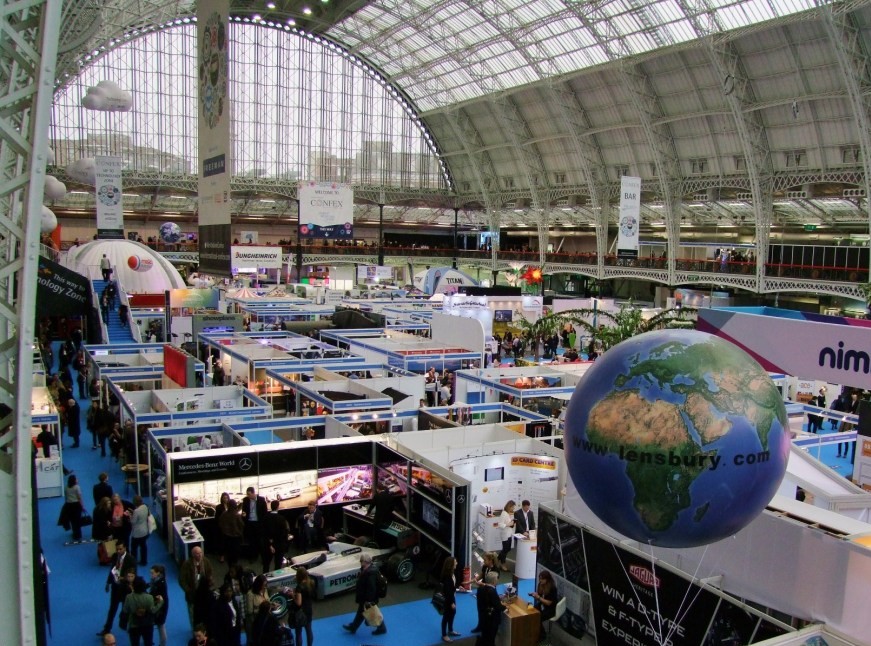
It was great to meet Mariska in person before the Confex started. We met for a coffee at the Hilton London Olympia Hotel. Later I found out that she is more of a tea person than a coffee person like me. During the meeting, I learned that she has knowledge and experience in B2B marketing, influencer collaborations and destination marketing. And next, she has the mindset and determination of an entrepreneur.
I also watched Mariska’s presentation on B2B influencer marketing in the MICE industry at Confex that day. Afterwards we had lunch together at Alborz on Kensington High Street. So many common topics of conversation! We could not stop talking!
What I didn’t know at the time was that this meeting was the start of our collaboration. That’s why I believe it’s always a good idea to connect with interesting people online and to meet them in person afterwards.
The start of our collaboration
Mariska invited me to join IBTM World 2019 in Barcelona, she created a collaboration with Reed Exhibitions and wanted me to be on stage to talk about influencer marketing and digital marketing.
Wyświetl ten post na Instagramie
Unfortunately I couldn’t join her in Barcelona at that time. It was not an easy time for me and just a few months later the pandemic started. The MICE industry was gripped by an unprecedented crisis. It was also a time of learning new skills and creating new collaborations.
After we returned to Poland and settled in Warsaw, I noticed that Mariska started her own podcast series in early 2020 called the B2B Influencer Marketing Chat Series. I remember that I didn’t miss any of the 10 podcasts and was a very engaging and active participant. This was of course noticed by Mariska and Alessia di Raimondo, her co-host during the first series of the podcasts.
I had the opportunity to reconnect with people that I already knew personally (Henrik von Arnold, Amanda Thurlow). Next, it was a fantastic opportunity to meet new people, such as Giovanna Lucherini, Ivo Franschitz, Keith Jenkins, Dries de Geyter, Dennis Lippens, Sabrina Meyers, Julius Solaris and Rupa Shah. Listen to the interviews here Season 1 B2B Influencer Marketing Chat Series.
After this series Mariska asked if I was interested to work together on a small project with her, then another project followed. And in October 2020 she asked me if I would like to join Word of MICE as a team member to support her with the ongoing projects and business development. There could be only one answer, of course YES!
Picking up the fruits of our collaboration
Our year together at Word of MICE, I had an amazing time.
Let me be honest, it was a very difficult and tough period, because many of our friends in the tourism industry and the MICE industry lost their jobs, projects were put on hold, and companies went bankrupt. On the other hand it was the perfect time to create new opportunities and collaborations, using our creativity. And let’s not forget the increasing role of digital marketing and online events.
One of my first tasks was to participate and support the second season of the B2B Influencer Marketing Chat Series. I was delighted to be able to invite, among others, Phil Gonzalez from the Igers Community (Instagram fans and mobile photographers) to this series and to add a little Polish element in the form of interviews with Anna Górska from ICCA and Robert Szulc – live conversation from Ecuador about incentives.
We had engaging and amazing conversations with representatives of the MICE industry and how they and their companies survived during the pandemic. Through this project I met more people and we spoke to Carina Bauer, Tim Williams, Nyomi Rose, Horacio Caamano, Helen Moon, Maris Kuklis and Antti Lumiainen and Nadia Rubtsova. Listen to the interviews here Season 2 B2B Influencer Marketing Chat Series.
Working at Word of MICE is the perfect opportunity for me to establish new ways of collaborations and executing new B2B influencer marketing campaigns, with companies like, Singapore Tourism Board, Helsinki Marketing, InspireME from Monaco, Catalunya Convention Bureau or France Convention Bureau.
I had the opportunity to work on campaigns and projects with influencers and content creators such as Sabrina Meyers, Nadia Rubtsowa, Nyomi Rose, Meg Strahle, Sina Bunte and Jorge Bravo-Pratscher. Miek Egberts will always remain in my thoughts.
During the year I learned a lot about resilience, flexibility and overcoming personal challenges, because Mariska and myself, we have been through a very difficult and emotional rollercoaster.
Thank you Mariska
I’m glad we have a similar vision, we often discuss topics related with the MICE industry and destination marketing. We keep an eye on the development and new trends in digital marketing. Every month of work is a blessing during these times. For me even more because I can do what I love and I can work from home.
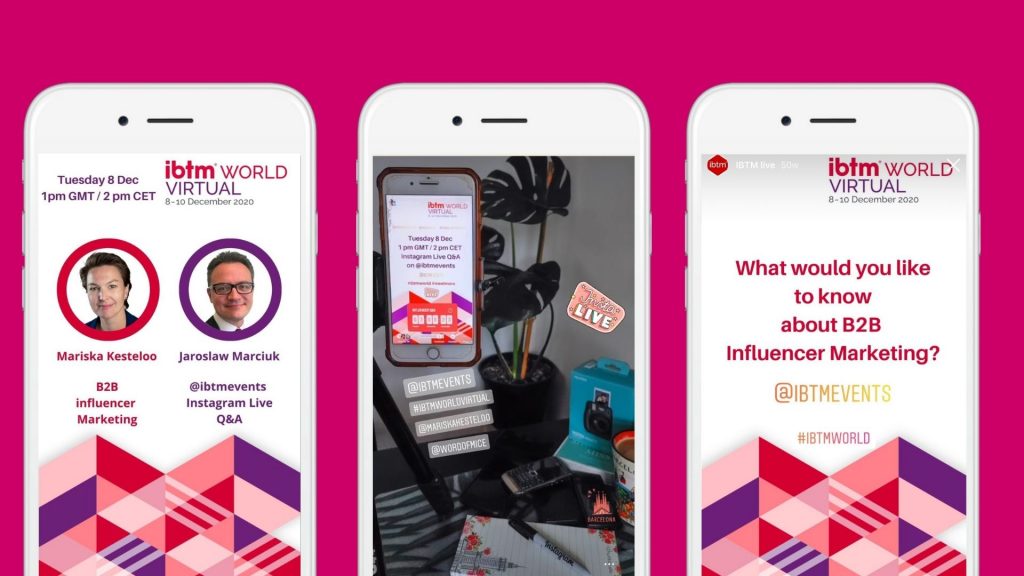
Thank you Mariska for involving me in every step of the company, sharing new ideas and projects and how to improve Word of MICE. Last year we ran, among many projects, LIVE on IBTM’s Instagram. And during another campaign we used the new Twitter Spaces broadcasting capabilities (#Associations Space) and the Hubilo platform for the online events (Singapore Spotlight Series #BizeventsSG).
As always Mariska repeats during conversations with clients “I am Dutch so I will say it straight”. This makes working with her always very transparent and focused on achieving goals. By the way, her Dutch sense of humour has a lot in common with the Polish one, which is probably also why we get along so well. Because it’s important to have fun in the work you do.
I really enjoy my work and the style that Mariska has introduced. Everything is always clear. Sometimes I have to sit many hours in front of the computer, and not everyone understands that the proverbial eight hours cannot be calculated. On the other hand, I also know that when something suddenly happens in my life, I can always count on her understanding and flexibility. I wish everyone such a business partner as Mariska.
If there’s one thing that I have to mention that was a challenge for me, is the fact that she pushes me to get out my comfort zone and encourages me to do the things I have rarely done this in my professional career. I know she’s right but I was not used to this.
I don’t know what the year 2022 will be like, but who knows? In times of a pandemic when our jobs and our loved ones’ health is so fragile, when it is difficult to predict what will happen in the MICE industry and in the entire world. Despite many unfavourable developments, I remain optimistic. There are many new opportunities and perspectives, and I am sure that together we will develop and strengthen the position of the Word of MICE.
I also know that Mariska is not only a good business partner, but I have gained a friendly soul. This is very valuable to me and I would never have thought that one meeting in London would bring so much good in my life. Again, you see now the value of 1 connection on LinkedIn.
Thank you for reading my story. I hope coming months will we very succesful for you.
Please, follow us on Twitter, Instagram, LinkedIn and Youtube to see the latest updates from us.
Jaro
Influencer Marketing on Instagram with Phil Gonzalez
Welcome to the second series of the B2B Influencer Marketing Chat Series. And we are very happy to have you all in and to launch again another interesting series to talk about B2B Influencer Marketing. My name is Mariska Kesteloo. I’m the founder of Word of MICE. And for the second series, we have a new host involved and that is Jaro (Jaroslaw Marciuk).
Jaro: Hello, my name is Jaroslaw Marciuk. So now you may understand why Mariska calls me Jaro. I originally come from Poland and recent five years I lived in the UK, London, and Cambridge. I am in our MICE industry for about 20 years working in hotels, with convention bureaux and also the event industry. On the other hand and I also have experience in Social Media marketing. And that’s how I met our host today – Phil Gonzalez. How many years do we know each other? 10 years?
Phil: Yes, I think I think like 10 years when we started building Instagramers Community.
Mariska: Thank you so much for the introduction. Jaro, nice to have you as our host of the second series of the podcast. Now it is time to tell you more about Phil Gonzalez. Would you like to introduce yourself, Phil?
Who is Phil Gonzalez?
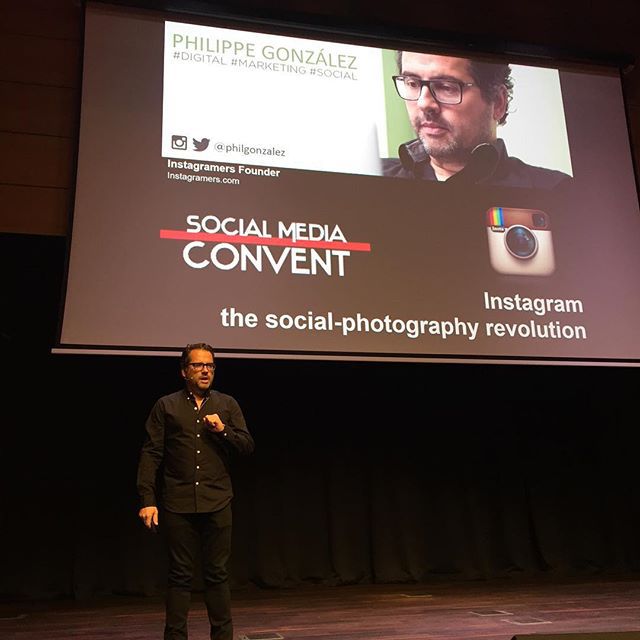
Hello, everybody I am Philippe Gonzalez. I am French but from a Spanish family. So I’m the son of immigrants who went to France in the 70ties. I used to live very close to Holland and Belgium because I studied in the north of France in a business school. I came back to Spain in 2000. I worked in the automotive industry as well. And like Jaro said, I was the last eight years of let’s say, working in a corporate area. I was working for EMC, the producers of “Breaking Bad”, “Mad Men” and “Walking Dead”. I was a digital manager for 24 TV channels in Spain and Latin America. For around 20 years I was also involved in the digital and internet blogs, social networks industry and promoting the series around the world.
The beginnings of Instagram in 2010
In 2010 I was developing my own application for a cooking channel in Spain. It was going very well. And one day a friend of mine told me “Oh, there is an application called Instagram. It’s very, very nice, it’s only one month old”. And I said, let’s try it out. I’m am a creative person, I like to paint and I like to take pictures and photography. When I first saw Instagram I said: “Wow, this app is going to change the world”. Check Phil`s profile on Instagram @philgonzalez.
I was never really fond of Twitter or Foursquare. I didn’t believe in many social networks that were launched. But when I saw Instagram, I had a sudden feeling, it was ground breaking. I was in my bed on a Sunday morning and looking at the Instagram app that was like two months or three months old. Instagram was launched on the 6th of October 2010.
Suddenly people started writing comments on my Instagram feed and asking questions. You know, they were writing – Can I be famous on Instagram? Or Can I be popular on Instagram? I replied and told them there are some rules they should follow. I had experience in marketing and I shared my knowledge of social networks. I was telling them – There are 10 rules you have to follow. And people replied in the comments on Instagram – Wow, it’s very interesting.
In December 2010 I said I have to make a website because people do not understand what Instagram is. For example, they were uploading pictures, and they were not putting any title. I said, OK I’m going to help people to understand the Instagram mobile app, and I started the first blog called instagramers.com. That was the real beginning of everything.
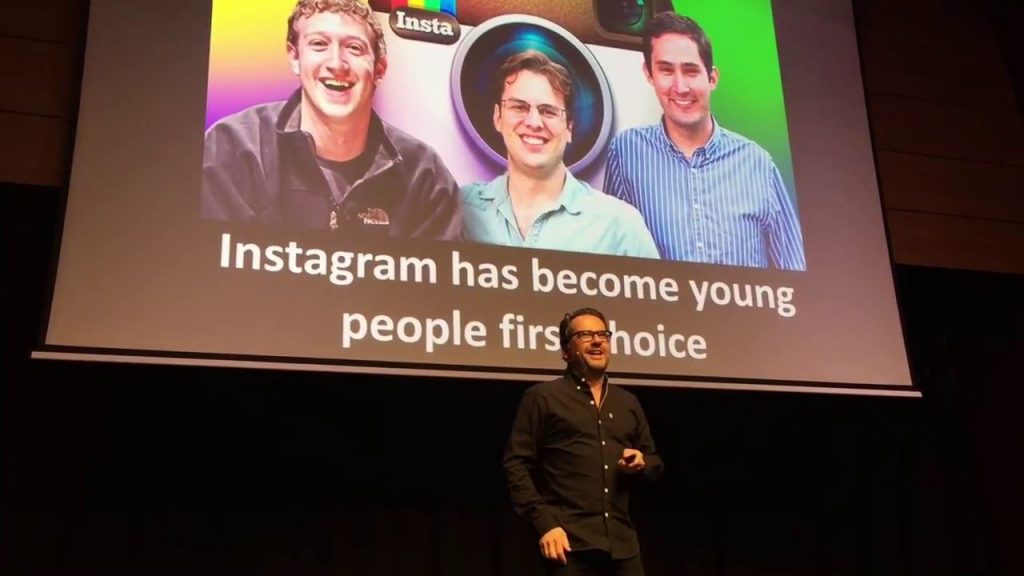
The Evolution of Influencers and Influencer Marketing
Mariska: People started addressing you for tips on how to become an influencer. Can you just share something about that evolution of influencers and influencer marketing?
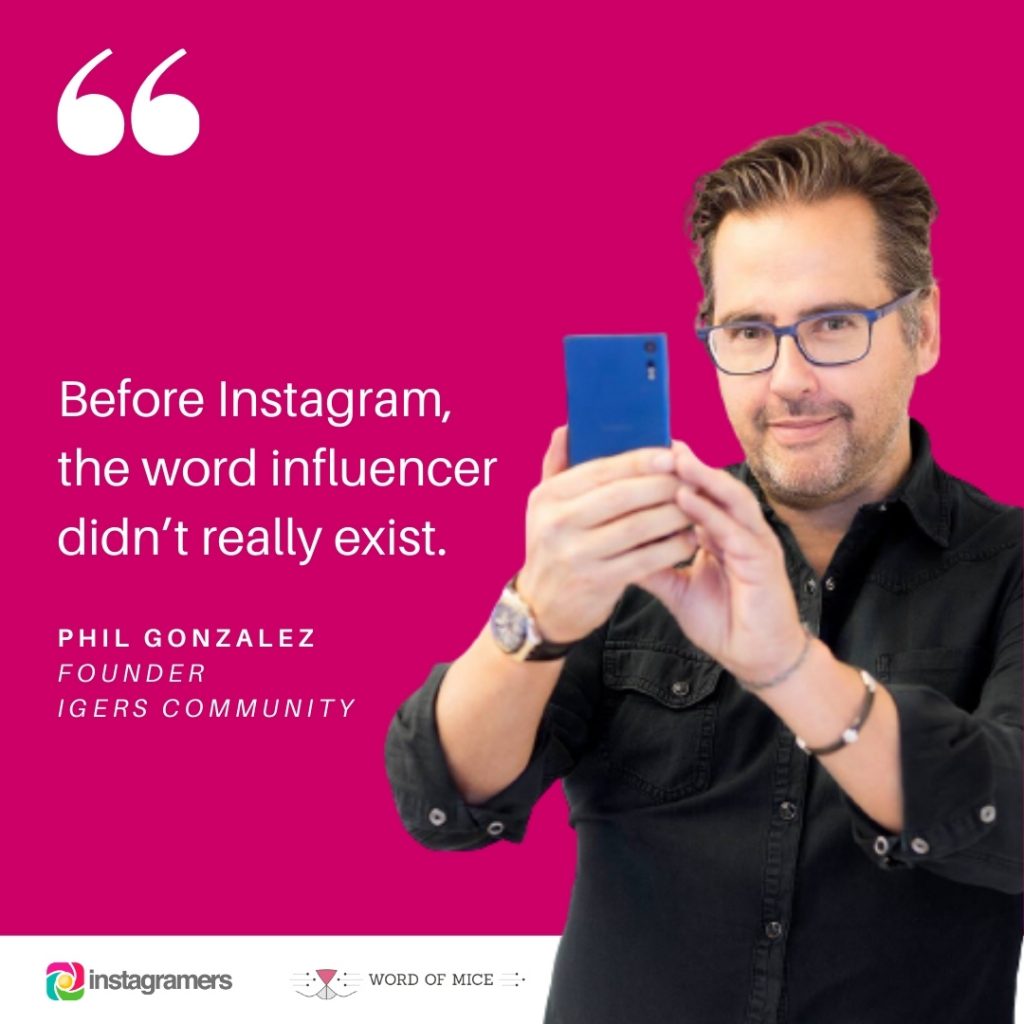
Phil: It has been really a great period of my life, really. I knew a lot of famous bloggers and Twitter people in Spain. Before Instagram, the name influencer didn’t really exist. We used to say – wow, he is a famous guy from Twitter or this famous blogger, but there was not this name stamped like saying this influencer.
So in the early stage of Instagram, I remember in 2010 and 2011, when you used to have 1,000, 2,000 or 3,000 users, you were an Instagrammer with a lot of followers. And I remember at this stage I knew quite all the influencers, let’s say in the world. You had one guy in Germany Tomas Kay with 70,000 followers, you had one guy in New York. It was quite easy to know all the people that were like more than 50,000 followers. These people used to be promoted by Instagram, they were not famous. They were not photographers, nor celebrities. It was only people promoted by Instagram.
Instagram as an opportunity for creators
What happened to me in 2012? I suddenly entered into the 100 people Instagram List. I was among only 100 people suggested by Instagram to other new users. 100 people, like me, were part of this list on Instagram worldwide, we used to have 2000 or 3000 people following us every single day. Can you imagine? That was like crazy. So these people were the very first influencers. They were not famous, because until 2012 we didn’t have celebrities, musicians, or movie stars on the platform. The first famous person on Instagram was Snoop Dogg, the rapper.
In the beginning, Instagram was really creating these audience monsters, and Instagram was not thinking we are creating the future of influencing. They were just creating stars, unknown people who published cool pictures. Suddenly these people had opportunities.
It was like that, someone was asking me: – Phil, can you come to a party? – Phil, can you come on a trip? I had a lot of friends at this moment that were like, maybe 23-24 years old. And they said, wow, that’s an opportunity. I can maybe spend one year of my life traveling. That was the first step of influencing on Instagram – people who just go on exchange. So you come to our dinner for free, you go to an event of a big company.
And from the side of the company, it was funny. The companies and the agencies at this moment had no idea at all about marketing on Instagram. In the beginning, let’s say the agency called you, and they say – We saw your followers on Instagram. Do you want to come to our place?” That was like, quite strange, because everything was building itself without no strategy, really.
Instagram app as a successful start-up
Mariska: From your perspective was there a strategy behind Instagram? Because I think Instagram wanted it. Was it the purpose from the start, that they wanted to grow that big?
Phil: Probably it was, but it was not really clear. Instagram, when they started, they were only four people working there. And in less than two months, there were 10 employees. In December of 2010, there were already 8 million app users, and they were still only four people. So it was like crazy.
They didn’t have time, they didn’t have a blog. So there were a lot of things they were doing on Instagram. They were just flowing. You know, it was like a real start-up.
Twitter had a feature called Suggested List, so they copied Twitter. Remember that Kevin, the founder of Instagram, was an intern at Twitter. So what he did was a Twitter with pictures. He replicated Twitter, but with more importance to photography. So he said I want a Suggested List for people who are cool on Instagram. But at this moment, Instagram was not thinking that they are going to create the influence of the future.
And now it’s funny, because in 2020 what happens is that Instagram and Facebook say: How can we get money from all these monsters we created? Because we don’t take any commission, any money from all these people. For 10 years they created monsters that today don’t give any money to them. So they are going to try it and they are finding new ways to monetize these people.
Influencers incredible stories on Instagram
Mariska: It’s interesting how a small start-up evolved by creating a community by trial and error and suddenly, then it got acquired by a larger company (Facebook), and then suddenly the investor’s role comes with money and causes different issues.
You also told me, in our previous call that people who didn’t realize the word an influencer suddenly discovered the potential and options of Instagram. Even people like lawyers, fishermen, or farmers. Can you just share a practical example of a person who grew their community because of Instagram and perhaps now has an extra income out of Instagram?
Phil: Yes, well, I have plenty, plenty of examples. I will just show you three from Spain, with whom I am much in contact. For example, I have a friend, she’s a lawyer. Actually, she was a lawyer for a large company. She was doing international contracts and agreements. She also started writing blog posts about food, like a blogger. As a blogger, she was known on the internet, only with her recipes, etc. One day she started publishing photos on Instagram. I recommended her to start her own profile. Now she’s a TV chef for the most important cooking channel in Spain. She left her job as a lawyer. She’s very famous, she wrote her first book, etc.
I also have friends from Catalonia. One has 70,000 followers and another guy from Catalonia with 150,000 followers on Instagram. And these two guys are great case studies because one of them was a fisherman. Okay, he used to go very early in the morning to start to fish. And one day started to share pictures on his Instagram. He decided to leave his profession and he is a photographer.
The third example is a policeman from Tarragona in Spain. He came with me to Iceland, we went to Peru together. They have changed totally their life, like this.
They were not supposed to become influencers and traveling all their life. So there is a kind of people I met at the really beginning of Instagram that we worked with, were like very young, like 22, they didn’t really know what they were going to do with their life. And they suddenly look at Instagram as an opportunity for one or two years. Now most of them still live with big Instagram income.
How to become an Influencer on Instagram
Mariska: We are living now in 2020, where we are of course in totally different times. The industry and the majority of the people who are listening and joining us today are from the meetings and events industry. There’s a lot of opportunities also for our industry to share knowledge and to share those experiences of meetings and events. Do you have any piece of advice or anything that you’d like to share, particularly for Instagram or for people who are not saying that they want to become an influencer or people who share their expertise by sharing their stories on Instagram?
Phil: Yes. Well, first of all, what do I say to people who want to become an influencer? I say forget it. Okay. You don’t have to try to be an influencer. What you need to do on Instagram, and social networks, is enjoying what you do and do what you love. And maybe one day, luck will knock on your door.
But if you wake up every morning saying I want to become an influencer, you are going to start very, very fast. You will be doing a lot of noise, posting a lot, etc. And later you can say I don’t have any results for six months and you will leave it.
Mariska: Because you’re not passionate.
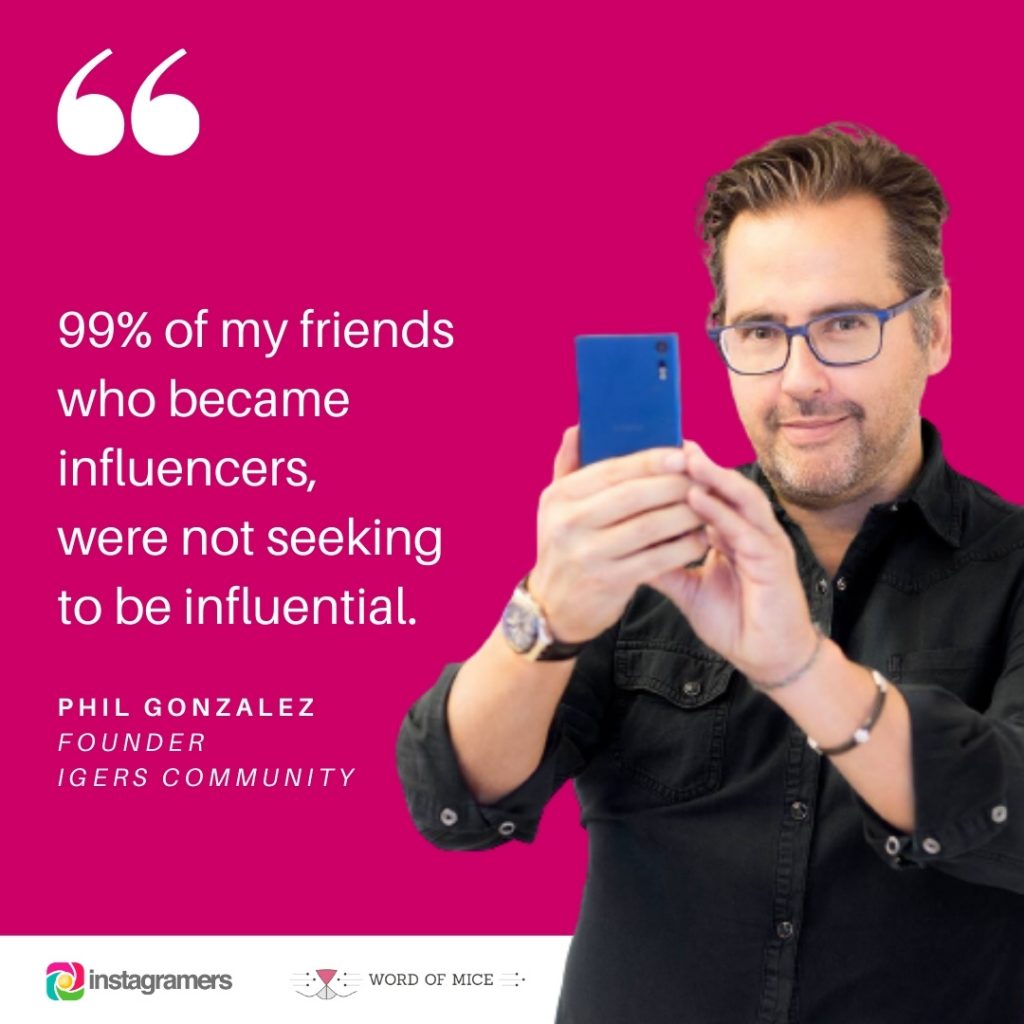
Phil: 99% of my friends who became influencers, were not seeking to be influential. It was just that their destiny cross their life, their talent exploded. So about the influencer industry, what I always say now is that sometimes we suffer a little bit of this weight of influencers, the ones that don’t have any talent. It’s just luck, etc.
So the first thing we have to remind to companies is that influencing is here and it’s really well based. There is a survey that demonstrates that more than 75% of the people believe a friend more than the advertising on TV. That’s definitely the rule you need to do influencer marketing, there is no doubt on this one.
Influencer Marketing on Instagram
There are a lot of companies that would like to start with influencer marketing on Instagram. I think they lost a lot of years to start with it. So there is no doubt we need to do influencer marketing. But the big question now is with whom are we working?
So at this moment, there are unfortunately still a lot of agencies which think like this and sometimes it happens to me. People call me and say – Phil, I want like five influencers with more than 300,000 followers.
And I ask them – That is your brief for the influencer marketing campaign on Instagram? What do you want, is like kilos, you need one kilo or two kilos of Instagramers?
No, what you need is: I want a guy specialized in technology with engagement on his Instagram that, when we do a campaign with him, I can be sure that I will have at least 200, 300 clicks, or 400 clicks on something related to software or to games or whatever.
Case study
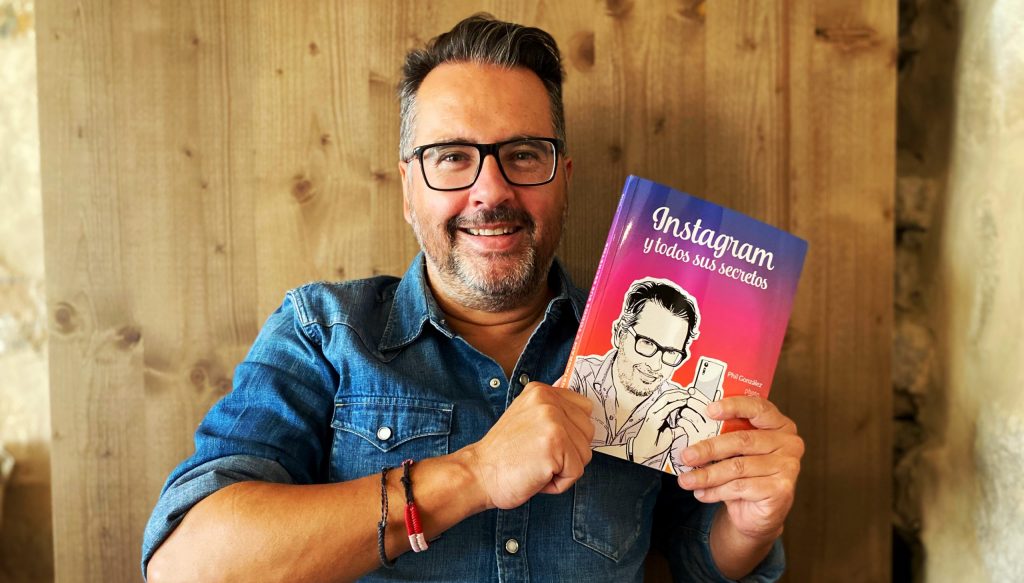
I have a simple example of my last book. My Instagram case study. Last week, two big influencers talked about my books on their Instagram accounts. One of them is specialized in technology and he has a good engagement rate with his community. In one single day, I had 200 more followers on my Instagram profile, 100 visits to my Amazon website to buy the book. He was like 200,000 followers on Instagram.
The same day I had a post about my book on Instagram of a lifestyle girl with 600,000 followers. She didn’t brought me any followers at all. No visitors at all. Ok, maybe 10-15 people followed me. Probably her followers were not really interested in buying a book about Instagram, they were more interested in the way she wears.
Mariska: This is about relevance, that person really has a niche. That’s also what I say to encourage people to have a specific niche also within the meetings and event professionals. People have for example a focus on incentives or focus on corporate events. If you have really that niche and you will show also that you have the expertise and knowledge in that niche then people will take rely on you and people will follow you.
Influencer Marketing on LinkedIn
Phil: I want to share with you when we talk about B2B Influencer Marketing. I have been complaining about LinkedIn for many years, because I say LinkedIn is such a big opportunity. When Microsoft bought LinkedIn I thought – Microsoft please do something because the usability of LinkedIn was still very bad compared to Facebook. Usability is the key to the success of the platform. I don’t mean the meaning of the social network, the usability was quite bad.
But they have an opportunity in the future with Direct Messaging, Live Streaming on LinkedIn, and with Stories on LinkedIn. I will share the example. LinkedIn Story can be a blast. As a professional, I want to explain for example an event. It would be better to do storytelling on LinkedIn Stories and Live on LinkedIn than on Instagram. So I have a very good feeling about LinkedIn in the future.
Mariska : I also ask questions within our community, and I also see some feedback from people. They’re using LinkedIn Stories, but I think it’s still evolving and perhaps they’re a bit slower than Instagram. There is a potential out there for LinkedIn to use the stories as optimal as it should be. We will keep following the trends and developments of LinkedIn.
How brands can work with Influencers on Instagram
Jaro: How brands can work with influencers on Instagram, but from a B2B perspective. Do you have an example of that?
Phil: Well, that’s a good point. Most of the time, like I say the agencies are all the brands are thinking in B2C marketing. Sometimes big brands come to me and say: I want to do something with a large number of followers. I’m not interested in this target. I used to work with influencers with the smaller communities like 80,000 – 100,000 and very dedicated to their work.
Okay, so when the company calls me for B2B campaign I say, usually, these people have lower followers numbers. B2B Instagram influencer may have 3,000, 5,000 or 7,000 followers. I tell them you will not find easily an influencer talking about a specific subject in B2B marketing with a huge following on Instagram. I think it’s even better because these people that have like 5,000 or 10,000 may offer lower rates, Also these content creators are very interested when people and brands want to work with them. The only problem is that it’s complicated to find them. You have to really enter the communities talking about the topic and seeing what would be the best content creator or ambassador to promote your product or service.
Mariska: Trade shows and events are not taking place now and we work in a B2B environment. I think still there’s a huge potential for growth in B2B marketing. Do you think so too?
Phil: Of course. I think there is potential but the problem we have right now is that the people think influencer are people you’ve seen on the beach with a cocktail on the island. There’s still a wrong perception of Influencer Marketing on Instagram or other Social Media platforms.
And that is something we will have to fight against and you know that the name influencer has its meaning? A few days ago media said about a group of influencers who were having a party in Marbella without safe distancing during the COVID-19 era. So that’s the bad news. It’s not smart. So that’s something we have to fight against.
Mariska: We’re also fight against wrong perception of inflencers. Instead of a word an influencer we use also content creator. I also like the word industry experts. We want to educate and show positive case studies of influencer marketing campaigns.
You can continue reading our interview with Phil Gonzalez here: The future and trends on Instagram in 2021.
The second season of B2B Chat Series
Welcome to the B2B Influencer Marketing chat series where we talk about B2B influencer marketing in the world of MICE (Meetings, Incentives, Conferences and Events). We speak with people from all around the globe about the role, the meaning, impact and possibilities of B2B influencer marketing. You can listen to us and our guests on Spotify, Apple Podcasts, Google Podcasts.
We launch the second season of B2B Influencer Marketing chat series in November 2020. Follow us on Eventbrite and signup for coming chats with influencers, CVB`s representatives and many other interesting guests from the MICE industry and Social Media world.
Sign up for our next episodes of B2B Influencer Marketing Chat Series: World of MICE – events on Eventbrite registration.
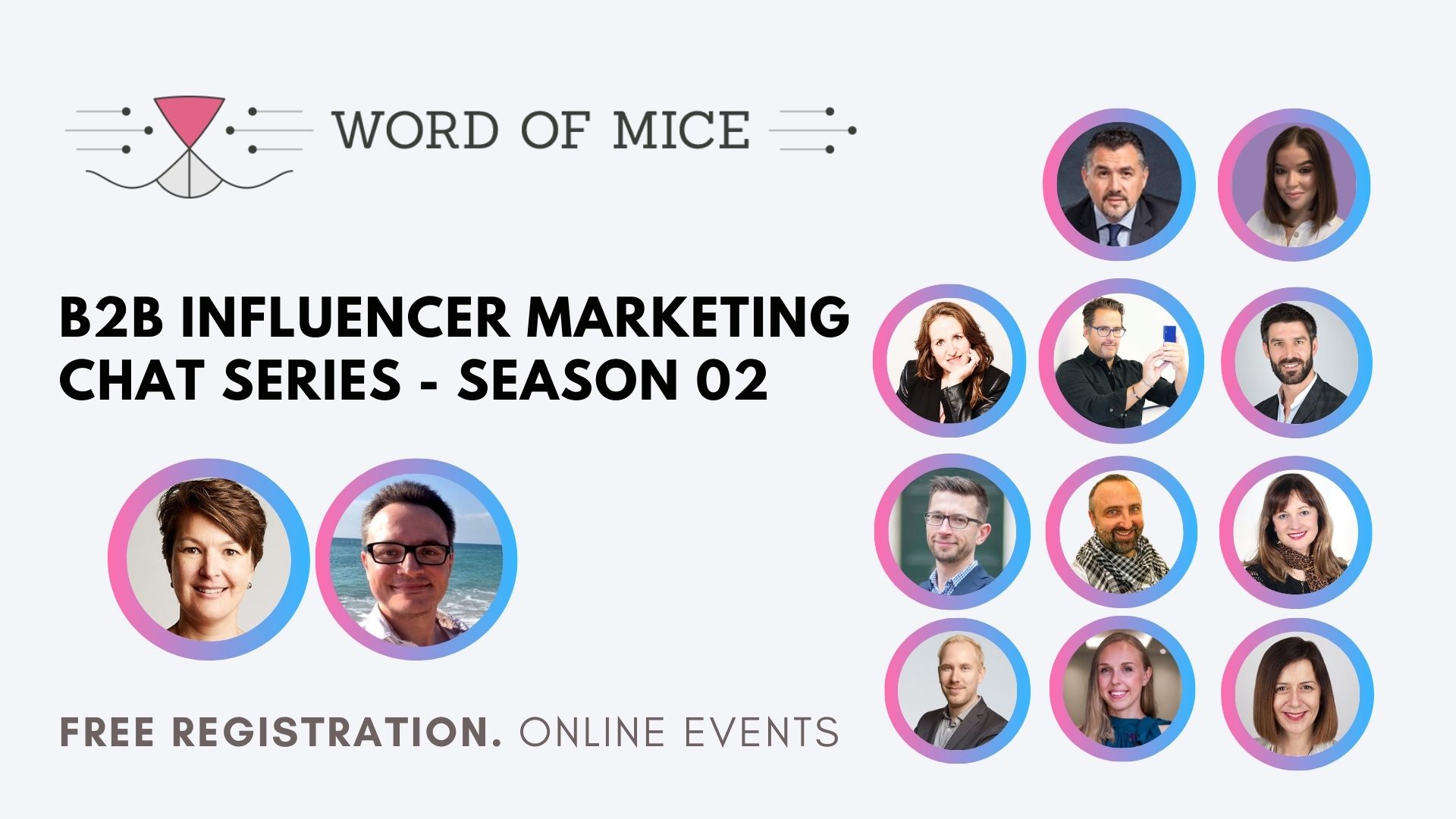
The second season of the B2B Influencer Marketing Chat Series
What are the B2B Influencer Marketing chat series?
Welcome to our LIVE interviews where we talk about B2B influencer marketing in the world of MICE (Meetings, Incentives, Conferences and Events). We speak with people from all around the globe about the role, the meaning, the impact and the possibilities of B2B Influencer Marketing on LinkedIn, Twitter, Instagram. Facebook, Youtube, TikTok and other social media and networking platforms. We share case studies, discuss influencer marketing campaigns for destinations and other suppliers from our industry and beyond.
Our hosts for the first series of 10 episodes Mariska Kesteloo and Alessia di Raimondo (S01). And for the second series of 10 episodes Jaroslaw Marciuk and Mariska Kesteloo (S02).
How to join the B2B Influencer Marketing chat series?
Join us every Thursday at 1 pm CEST /12 pm GMT LIVE on Zoom. You can participate and ask questions to our special guests. This is the most engaging way to be part of our series of interviews.
Follow us on Eventbrite and sign up for the next live interview with influencers, entrepreneurs, and many other interesting guests from the MICE industry and beyond. You can register and participate for free.
World of MICE – events on Eventbrite – free registration.
What if you missed a live episode?
In case you missed our live session, listen to our conversation on your favorite podcast channel. We upload the whole interview to the following podcast channels: Spotify, Apple Podcasts, Google Podcasts and Radio Public.



Blog posts
Do you prefer reading over listening? You can read the entire conversation from each interview on our website.
The second season of B2B chat series
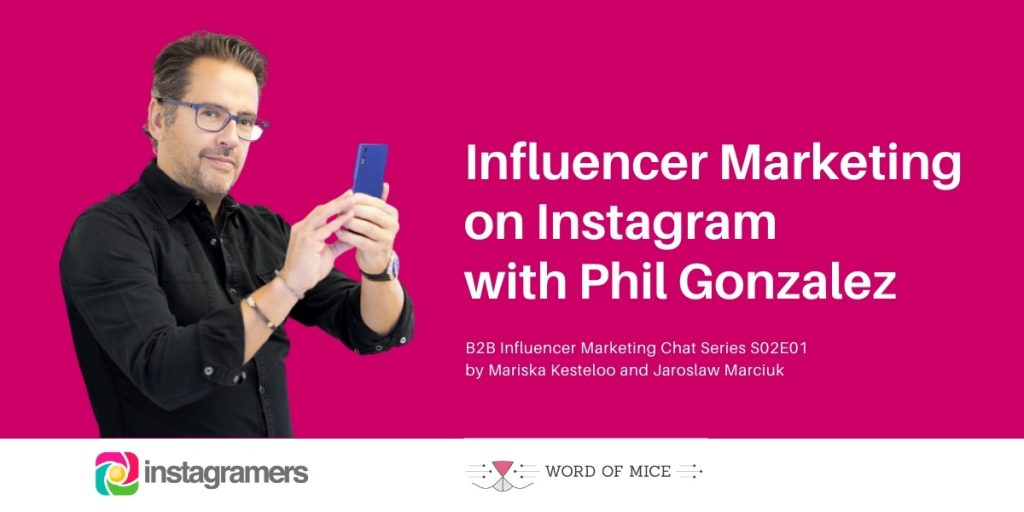
We started the second season in November 2020 with Instagram Influencer, Phil Gonzalez and our new regular host – Jaroslaw Marciuk. Enjoy watching, listening, and reading the B2B influencer marketing chat series.
1. Phil Gonzalez – Influencer marketing on Instagram
Phil Gonzalez, besides being a dynamic person, he got involved in the internet and social media from the early start. He saw the evolution of influencers and influencer marketing, before it received its official name. Besides he’s a huge fan and passionate about Instagram and with his community (Instagramers Network) and followers he reaches thousands of people.
During this episode with Phil Gonzalez we will cover the following topics:
- The role of Instagram
- How Instagram has changed over 10 years
- The evolution of influencers
- Instagramers (Igers) and mobile photographers community on Instagram
- How do you become an influencer on Instagram?
- How does the future look like for Instagram? (Reels, Shopping, videos)
- Is it too late to start your Instagram profile?
You can read two blog posts: Influencer Marketing on Instagram and The future and trends on Instagram in 2021
2. Tim Williams – Measuring impact of influencers
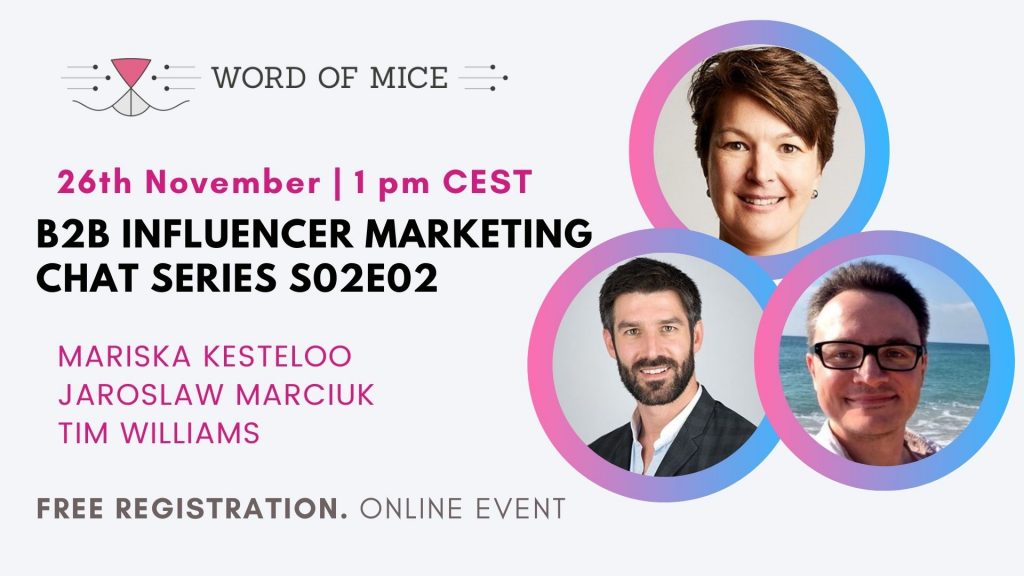
Tim Williams is the CEO of Onalytica, an Influencer Marketing company that provides Influencer Relationship Management software and supporting professional services. Established in 2009, Onalytica helps brands to run their influencer programs to increase brand awareness, improve brand reputation and drive lead generation or consideration in the early part of the buying process.
During the episode with the Tim Williams we will talk about:
- The outcome of the Onalytica report: The Current State & Future of B2B influencer marketing
- The impact of B2B influencer marketing
- The underestimated role of data in the world of influencer marketing
3. Anna Gorska – The role of marketing in the world of international associations
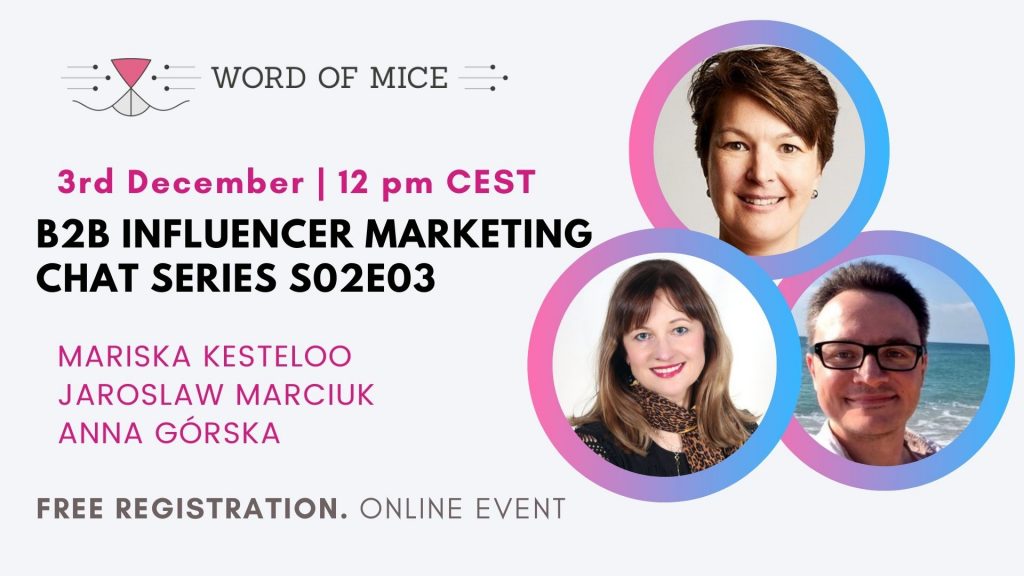
Anna Gorska has been involved in the meetings industry for over 20 years. Since May 2019 she is part of the Advisory Board in the leading Polish association called PCO Symposium Cracoviense, where she is responsible for relations with the international associations. In March 2019 Anna became the Vice President of the SKKP Polish Conference & Congress Association. She is a passionate lecturer at universities promoting the importance of the meetings industry to the young generation. In October 2020 she was elected as a Board member for ICCA (International Congress and Convention Association). She was also chairing the ICCA Central European Chapter for 6 years.
We will talk with Anna Gorska about:
- News from the World; an initiative that was created during the lockdown to keep in touch with associations. And now this initiative is on the list for an award
- The ICCA conference that was held in November 2020 and had more than 1500 participants online
- The role of the different social media channels; why Facebook is more popular in Poland than LinkedIn for associations?
4. Nyomi Rose – Influencer marketing on TikTok and Generation Z
Nyomi Rose is a final year Events Management Student who has flourished during this COVID-19 era through leveraging her social media skills and to spread positivity, passion and love for the events industry. In six months Nyomi has transformed her skillset and developed a status as a young professional woman within the world of events, becoming a prominent figure in the pursuit of diversity, sustainability, social media optimisation and youth empowerment through her Instagram and LinkedIn pages.
Nyomi Rose empowers and provides impactful insight to individuals and SMEs to optimise their social media and marketing strategy. Nyomi is a Tech, AI and Data enthusiast and aims to bridge the digital gap through sharing her knowledge and insights.
We will discuss with Nyomi:
- TikTok from a personal account to professional influencer
- Numbers, influencers, demographics, terminology and
- The voice of the young generation and misunderstanding of TikTok
- Is the MICE industry ready for TikTokers collaborations and campaigns?
- TikTok B2B influencer campaigns – case studies
- How to use TikTok in the era of Covid-19?
Join Eventprofs TikTok Challenge created by Nyomi
5. Horacio Caamano – Influencer marketing in South America
Horacio Camaano is a Director of Global Accounts Latin America at ConferenceDirect in Buenos Aires, Argentina. ConferenceDirect is a full-service meeting solutions company specializing in site selection/contract negotiation, conference management, housing and registration. It provides expertise to 1,600 corporations and associations worldwide through 350 Associates and regional offices. Horacio is passionate about the meetings & events industry and of course marketing.
He created his home studio during the lockdown and decided to dedicate his time to learn new skills. During the episode with Horacio we will cover the following topics:
- Insights from a MICE influencer; how is life nowadays in South America
- How to become an influencer in Argentina and South America?
- The untouched potential of influencer marketing in South America
- The future of the MICE industry in South America
- The role of B2B Influencer Marketing
6. Helen Moon – The role of wellbeing in the MICE industry
Helen Moon founded Event Wellbeing Week and EventWell Ltd in 2017, the event industry’s first charitable social enterprise and resource dedicated solely to offering wellbeing advice, knowledge and support to event professionals to keep them well.
She has more than 20 years of experience in the world of marketing and events and she believes passionately in the value of live events and the power of the communications that all marketers create and deliver. She loves what she does, and believes that every individual should be given the freedom and opportunity to find their passion in life.
During the episode with Helen Moon we will cover the following topics:
- The role of wellbeing in the MICE industry
- How Helen Moon got passionate about wellbeing and started her company Eventwell in 2017?
- The role of marketing for her company; sharing best practices from Eventwell
- Sharing practical tips on how to disconnect for eventprofs (especially going offline) in a very connected world
7. Maris Kuklis – Airlines marketing in the era of Covid-19
Maris Kuklis is a curious, adventurous and enthusiastic relationship marketing team player who is always keen to learn, develop and share knowledge. Result-driven, passionate and creative guy with solid business acumen and a comprehensive skill-set underpinned by extensive experience in hospitality, events, airline and destination sales as well as marketing.
Within Etihad Airways, Maris is responsible for developing the MICE market for Etihad’s global network, long-term value and profitability.
During the episode with Maris we will cover the following topics:
- What were the most important steps that Etihad Airways has taken on the level of safety and security of the passengers?
- What has Etihad Airways done to remain in touch with its clients?
- The future of Etihad Airways; new initiatives and what are the plans for 2021 and beyond
8. Robert Szulc – How to build a community on Social Media
Robert Szulc is the CEO of Boomerang, an incentive company based in Warsaw, Poland. The company has specialised in travel for corporate clients for 20 years. Experience, passion and creativity are their three main strengths. They organise incentive and corporate trips abroad, like motivational company trips, conferences, congresses and fairs.
The aim of all projects is to strive for excellence in providing participants with unforgettable experiences. A network of contractors around the world and travel experiences allow them to create unique and unconventional incentive programmes. They are avid travelers with great knowledge of the countries they travel to.
During our chat episode with Robert Szulc live from Ecuador we will cover the following topics:
- How you can create a community on Social Media by sharing your passion and personal ideas
- How his community contributed to the growth of his incentive company
- Sharing his dream journey that he started in January 2021 and will visit 4 continents in 4 months #worldinstages_4continents
- Latest news about the new normal in travel and incentives – airlines, airports, hotels, MICE industry and destinations in Europe and South America
9. Carina Bauer – The future of exhibitions
Carina Bauer began her career in retail and catering, before entering the meetings industry in 2002 as the Marketing and Operations Director for IMEX in Frankfurt, as part of the original launch team for the exhibition. Following the expansion of the IMEX brand into America in 2009, Carina was appointed CEO of the IMEX Group. In her role, Carina is responsible for all aspects of the business.
We are all sad that the IMEX 2021 edition in Frankfurt is cancelled, what will happen? The following topics will be covered with Carina Bauer:
- We will talk about how IMEX adapts to the current changes. More details about the decision-making process will be shared in our conversation
- IMEX has a strong community and loyal visitors who come every year to Frankfurt and/or Las Vegas. We will talk about how F2F communities were fragmented by Covid and what that means for IMEX and for others
- Marketing & social media. IMEX always has been very active on social media and Carina will share insights about the tools and strategies they have used
10. Antti Lumiainen & Nadja Rubtsova – B2B influencer marketing campaign
Antti Lumiainen is an event enthusiast with over 10 years of industry experience and a strong believer of face to face and the power of events. Having a diverse background in associations, exhibitions and event management, Antti is now working with Helsinki Marketing, promoting Helsinki as a meetings and events destination. He has been active for several years in the local chapter of Meeting Professionals International and currently holds the position of President Elect. He is passionate about giving back to the industry that has created so many possibilities for his career.
Nadja Rubtsova has more than 10 years of experience in the meetings industry. Before starting her own business in 2020, Nadia has worked in 4 different countries as well on the suppliers’ side as from the client’s side. Nadia specialises in business development, sales and negotiations.
During this episode we will cover the following topics together with Nadja Rubtsova and Antti Lumiainen:
- Why has Helsinki chosen to put influencer marketing for the meetings & events industry on their agenda?
- How do you select the right influencer for your city?
- Based on which criteria did Helsinki choose for Nadia to work together?
- How do you create a relevant content calendar in these challenging times for our industry?
- What are the tasks of the influencer during the campaign?
Jois us
If you have an inspiring story and/or experience which could be relevant for our audience, please contact us: mariska@wordofmice.com
Meet Word of MICE
Word of MICE is the first and only global influencer community for the MICE industry. We inspire hotels, venues, destinations and other suppliers to employ Social Media Influencers as an integral part of their brand strategy and explore the true potential of influencer marketing. We create unique creative, tailor-made campaigns for all suppliers in the MICE industry over the globe.
Our B2B clients appreciate our years of experience in the MICE industry combined with an innovative product to bring their brand awareness to the next level.
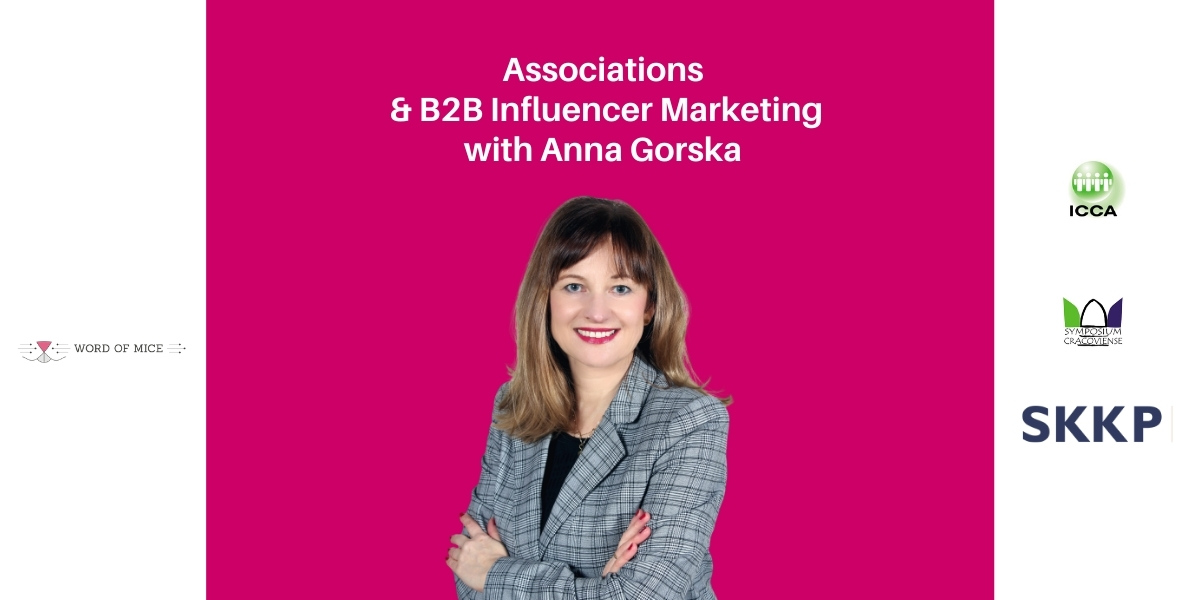
How associations can benefit from social media? – the interview with Anna Gorska
Welcome to the second edition of the B2B influencer marketing chat series. Today, we have a great guest from ICCA and associations world in our podcast. Let`s dive into the discussion with Anna Gorska and find out how international associations can benefit from social media and marketing.
Who is Anna Gorska
Anna Gorska has been involved in the meetings industry for over 20 years. Since May 2019 she is part of the Advisory Board in the leading Polish association called PCO Symposium Cracoviense, where she is responsible for relations with the international associations. In March 2019 Anna became the Vice President of the SKKP Polish Conference & Congress Association. She is a passionate lecturer at universities promoting the importance of the meetings industry to the young generation. In October 2020 she was elected as a Board member for ICCA (International Congress and Convention Association). Anna was also chairing the ICCA Central European Chapter for 6 years.
We talked with Anna Gorska about:
- News from the World; an initiative that was created during the lockdown to keep in touch with associations.
- The 59th ICCA Congress that was held in November 2020 and gathered more than 1500 participants online.
- The role of the different social media channels; why Facebook is more popular in Poland than LinkedIn for associations?
Have you missed the live episode with Anna Gorska?
In case you missed our live session with Anna Gorska, listen to our conversation on your favorite podcast channel. We uploaded the whole interview to the following podcast channels:
Do you prefer reading over listening? You can read most of our conversation with Anna Górska below. Enjoy listening and reading.
59th ICCA Congress 2020
Mariska: It`s clear from your CV and from your background that you have a huge passion for the MICE industry. So I can say that you are true advisor or ambassador and perhaps even better said, a true influencer for the destination of Poland. I suppose the majority of the readers know ICCA, but can you share something about your role in ICCA and also about the ICCA Congress that took place in 2020? Can you share any insights why this congress was also so special?
Anna: Yes, of course. ICCA means International Conference and Congress Association. Right now, ICCA has over 1000 members from all over the world. In my opinion it is the most important organisation dealing with the meetings industry in the world right now. ICCA organises its’ congress every year and it takes place in a different part of the world every year. And in fact, every year, many cities try to bid for it to be the host of this event, because it’s a very prestigious event. So every year ICCA Congress gathers up to 1000 people from the meetings industry and from the top management of the members.
This year, the title of the congress was “Transforming Events Together“. It was scheduled to take place in Kaohsiung in Taiwan. But due to the COVID, the Board of ICCA decided to organse it for the first time ever, in a different form, in a hybrid format. So besides Kaohsiung, there were seven other regional hubs chosen in a different parts of the world, where the members could meet face to face. For example, in Europe, we had hubs in Luxembourg, and Malaga. The hubs were chosen so that delegates from all over the world didn’t have to travel to Asia, and could choose the nearest hub to their destination.
The attendees also had option to participate virtually. And thanks to that, the event hit a record number of attendees. There were 1500 participants.
ICCA also offered a six week educational program before the actual start of the congress. So for the registered participants, there were sessions every day on the topics like storytelling, macro and micro trends. And the sessions are still available on demand until the end of the 2020. So I think it’s the future of the meetings – the hybrid way, because it gives you an opportunity to participate either face to face or virtually, in case when you don’t have time, money or other sources to travel far away.
The 2021 ICCA Congress wil be held Cartagena, Colombia. So we all hope that we will be able to travel freely until November 2021.
Challenges for associations in the era of Covid-19
Mariska: You’re also very passionate about education. You were telling also in your introduction that you’re teaching students, so I think education is very important also for the ICCA community. So I hope that there will be more education about associations, about bidding or any other related topics. So I think it’s a great way forward and I’m really curious how the conference or in what way the ICCA congress in 2021 will take place in South America in Cartagena.
You are very passionate about associations. Associations in our industry are also known as an audience that is difficult to reach, difficult to get in touch with. You have a lot of experience about the association market. Can you give any insights about this particular market, about this particular audience?
Anna: Yes. First of all, I think that for many associations the annual congress is the main source of their income. So, during the COVID-19 pandemic crisis, when the event has to be canceled, or postponed, it’s a problem for the association. In many cases, the leaders of the associations work voluntarily. So they have their own business issues to deal with, and it’s hard to concentrate for them on the associations market. I think this is the biggest challenge all associations are facing now.
And of course, uncertainty is the main problem, we don’t know when we’ll be able to meet face to face again, and travel again freely. So this is also a very big challenge. Others are like remote work and organise virtual meetings for associations. Others do not have experience and digital skills. So I think it would be reasonable for them outsource this and use sometimes experience of the PCOs to help them organise virtual meetings.
In my opinion, right now, the most important is to stay connected with the members, and to offer them an open communication and just examine their needs. Just ask them what they need right now. Because all of our priorities have changed. And what was good for the members last year, probably is not good right now. We need to learn to adopt to the members needs. I think it’s the most important right now for all national, for medical and industry associations.
An academy for meeting planners and event professionals
Mariska: I think you’re absolutely right, associations have a very fragile structure. And like you said, they’re based on volunteers, those volunteers perhaps may run their own company or employees. Also there has a lot of things changed, we’re now working from home, perhaps also personal situations have changed. And your working environment has changed. So we are facing a lot of challenges, of course, and it has a huge effect on the on the quality and also on the role of associations.
And the second, what you mentioned is the online experience. Yes, if you are working as a volunteer in an association, that doesn’t mean that you’re directly an online event strategist or online event planner. And also, as we’re living such an ever changing environment, what we need now today is perhaps different than we would need in a week or in a month’s time. So it is really a very, very challenging, not only for us, and as we’re speaking here, a very challenging world. But of course, yeah, an ever changing environment. And you say you reach out to members, you get the advice to reach out to your members. And just pick up the phone and call them or send them a message. Do you have any other advice? How can you stay in touch with your members or people that are related or connected with associations?
Anna: I can give you an example of the project we introduced in our Polish Conference and Congress Association (SKKP). The main goal of SKKP is to educate the members. And last year we introduced a project called SKKP Academy.
SKKP News from the World
But, of course in March this year, it was obvious that we could not organise any face to face trainings or educational products. So we introduced something new, the project called SKKP News from the World. It is a series of articles in which we write about case studies, reports, new promotional campaigns, showing how the world is reacting on this unusual and unexpected situation. And we make it available to our members and to other MICE industry representatives in Poland. The goal was to help the members to deal with an unexpected crisis by showing them the good examples from the world. Because we all know that information is crucial to conduct right decisions and to create recovery plans. It also allows members to react quickly and to implement changes in their strategies.
The project was very simple, the articles were spread throughout the social media and received a very positive feedback. The Polish MICE industry media also helped us and they distributed articles through their channels on social media, and in their newsletters. The project was also one of the finalists in the international awards, organised by association executives. We know that MICE professionals read it, because I can see how they use it in their campaigns, how they use it when they speak to others, so it’s very positive for us. And it motivates me even more. And I decided to continue the project also next year, and keep on writing the articles.
Mariska: Could you please share with us, because you’re saying you’re sharing case studies or articles. Were these articles also about associations and case studies from MICE companies? Can you say something about the type of content that you shared within that new initiative?
Anna: Yes, we shared the reports that appeared in the MICE industry. For example we distributed the reports issued by ICCA, or the other associations. And we also wrote about good positive examples of the different campaigns. I can share an example of the campaign in England, it’s called, ‘It’s time to meet again‘. During the campaign the employees of the industry took pictures with their smartphones, in their workplaces. And then they share it through their own social media channels. So to show that positive and personal way of how to organise event in their region.
Mariska: This is important for anyone who’s creating a new initiative or building up a community. So you really concentrate on content from the industry, from the meetings and events industry, and to share it with your members. You didn’t share any information from outside the meeting and events industry?
Anna: No, we share mainly information of the meetings industry. We read articles in the international newspapers, social media, different channels, and we choose what in our opinion could be important.
How to share news with your audience?
Mariska: You know the challenges of your audience, that you were the right person to choose the right articles that were relevant or could be informative for your audience. Also, how did you share those articles with your audience? Did you create a newsletter? Did you create a company page on Facebook? Or what platform did you use, and how frequently did you share the news with your audience?
Anna: Okay, so first, we started to write articles twice a week. And right now, I write articles once a week. We have created the webpage of SKKP section called ‘News of the world’. Other than that I posted on my personal Facebook profile and LinkedIn profile. As SKKP we also distributed the content on our Facebook page. And as I can see the others also share our articles on their personal profiles. The Polish MICE media such as: Meeting Planner, Think MICE and MICE Poland, also joined our initiative. So all these actions give an opportunity for the wider audience to read about it.
There is so much information and not many people have the time to read it all.So this is helpful as that what we choose, of course, from our point of view, what is really important, and share it, so they the have real knowledge all in one place.
Facebook or LinkedIn?
Mariska: Yeah, but I think it’s important because you have so many years of experience in the industry. You know what your audience needs, and they trust you as a person. So therefore, I think you are the right person to choose that information and to share it because you are authentic, you are trustworthy, and I would say the influencer within the world of associations. And going back, because you shared the content also on your private channels and on your Facebook and on your LinkedIn. And what is then your preferred channel, if you would choose between LinkedIn and Facebook? Or where did you get more reactions on Facebook or on the LinkedIn page?
Anna: Well definitely on Facebook, we get more reactions. And I use my personal Facebook profile only for business related matters. You know, I don’t use it for private reasons. I mean sometimes I do, but only when I want to promote the destination Poland. So I don’t show the birthdays of my children. I see that in Poland, Facebook, at least for the industry associations as MPI Poland Chapter, SKKP, or SITE Poland, is used more frequently than LinkedIn. And although I also share the articles on the LinkedIn, I see much more reaction on Facebook, and also much more shares on Facebook than on LinkedIn. I don’t know why, it shoold be the opposite page.
Mariska: Is it also to do something, for example, with cultural differences, or perhaps with the preferences of your audiences, and perhaps associations in Poland, are more active on Facebook instead of LinkedIn?
Anna: I think that Polish associations are more active on Facebook than LinkedIn. And just my friends from Facebook and LinkedIn, they’re more active on Facebook, I can see it and I’m not sure why. Maybe it’s a Polish thing. Maybe not.
Choose the right channel to communicate with your audience
Mariska: Yes, can be. But it’s important to know because we’ve spoken with many people, during our live webinars with different people from around the world. And a lot of people underestimate the cultural differences that are in each country exists. And also the rules and regulations, of course, but also cultural differences that in some countries. For example, Twitter is much more used and common in the UK, than it would be for example, in the Netherlands, although we use Twitter, but it’s not our place to go to. And, and sometimes it also depends on the industry. So it’s good to know if I would work for a Polish association I would know that I would invest more time and effort in Facebook than on LinkedIn.
Anna: I think it would be a good idea to do that. And I know you are involved in so many social channels and profiles, you have so many of them, especially Jaro . But me personally, I use only two of them only Facebook and LinkedIn because I just don’t have time. And you know, it’s not so easy to post the right content on social media, you have to think about it. And about the content and it just takes time. So I chose to have only two of them.
Mariska: I think it’s a very wise decision to only choose one or two platforms, maintain those and build the community then to have five or six profiles, where you don’t have the time. My preference is LinkedIn. For some people, for Jaro, of course, it’s Instagram. I think it’s a very wise decision to focus only on one or two social media channels.
Associations in 2021
Mariska: Is there anything else that you would like to share with us concerning associations, or any predictions or suggestions that you would like to share with us for 2021?
Anna: Yes, maybe two things, I would like to encourage everyone to get involved in associations. I know, it takes time. But it also gives you a very positive things, and to do something good for the others. That’s why I’m so passionate about associations. And that’s why I get involved in working with them.
Let`s talk about predictions, I think the meetings in the future will be smaller. And unfortunately, because a big part of them will be organised virtually. We will need a lot of time to feel safe to travel again, including long distances. The meetings will be smaller, and probably more local, and then regional. And we need to learn. That’s why I think we need to learn new digital skills, to be able to move freely in the virtual world.
This would be my advice, to learn new skills, and I’m also speaking about myself, I need to be more proficient in a virtual world. It’s not easy, but I think what we will learn now, it will give us fruits for the future.
Mariska: Indeed, I think you’re absolutely right. And also thanks for your advice to get involved in associations. I always have been very involved in MPI, which also gave me a lot of confidence. And from my perspective, I totally agree with you, Anna. I think for a lot of people has been a learning curve, not only for event planners, but I think also for a lot of other industries how to deal with online meetings, online conferences, and anything else.
Anna: Well, I think all of us are influencers in some way. And especially now when we all use social media and we live in an online world. So my final remark would be just to be cautious what you post on your social media.
Mariska: I think it’s a very good piece of advice for all of us. Indeed, think twice before you post something on social media because you might harm your reputation amongst your followers. So thank you very much, Anna, for sharing your insights and passion about meetings and events industry.
Connect with Anna on LinkedIn and Facebook.